Why Roof Tarping Matters Before the Next South Florida Storm
In South Florida, a damaged roof can become a much bigger problem when the next storm rolls through. Heavy rain, strong winds, and tropical weather can quickly turn an existing roof issue into water damage inside the property.
A few missing shingles, a small opening, or an exposed section of roofing may not seem like an emergency on a clear day. But once rain gets through that opening, water can spread into ceilings, walls, insulation, flooring, and other areas of the home. This is why roof tarping is an important temporary measure when a roof has been damaged and permanent repairs cannot be completed immediately.
Roof tarping is not a replacement for a proper roof repair. Instead, it provides temporary protection while helping prevent additional water from entering the property. For homeowners who already have roof damage, getting a tarp installed before the next storm can make a significant difference.
What Is Roof Tarping?
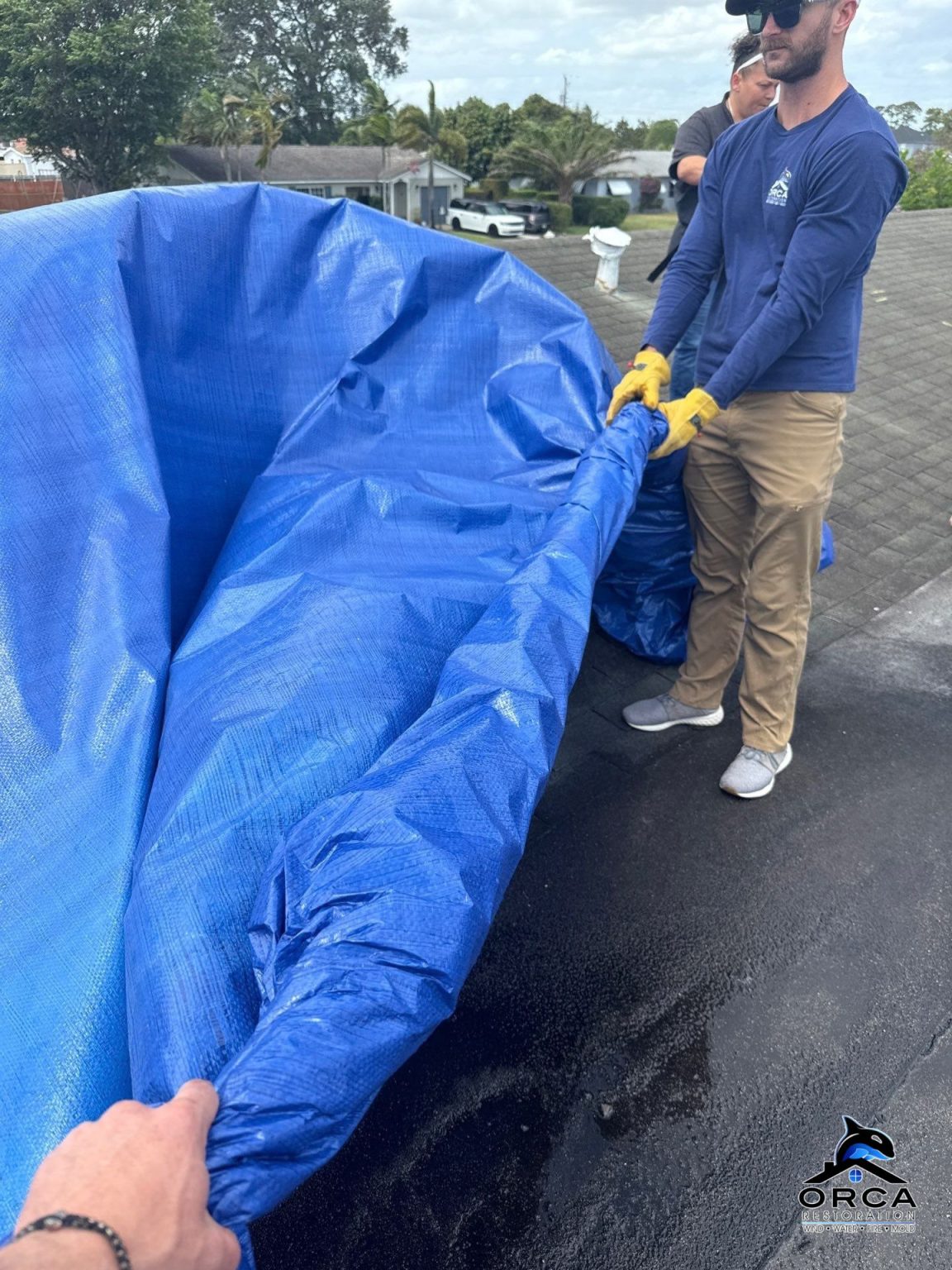
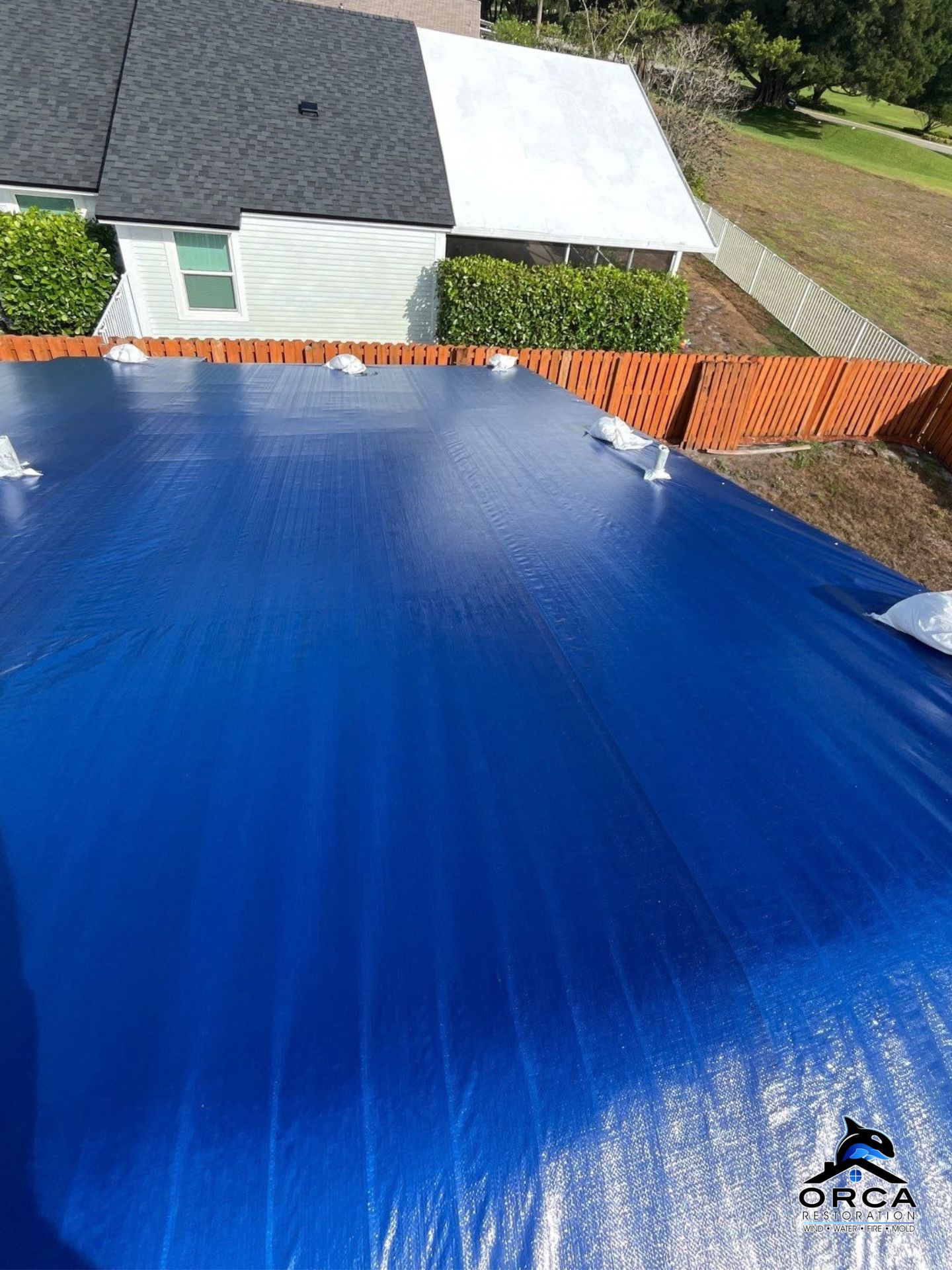
Roof tarping involves placing a heavy-duty, weather-resistant tarp over a damaged portion of a roof to temporarily protect the area from rain and the elements.
Tarping may be necessary after:
- Hurricane or tropical storm damage
- High winds
- Fallen trees or branches
- Missing or damaged shingles
- Roof punctures
- Severe rain
- Other events that leave part of a roof exposed
A properly installed tarp is designed to cover the vulnerable area and direct rainwater away from the opening.
Because working on a roof can be dangerous, especially when the surface is wet or structurally compromised, homeowners should avoid attempting to install a tarp themselves. Professional tarping helps ensure the damaged area is covered as safely and effectively as possible.
Why Roof Tarping Is Important Before a Storm
If a roof is already damaged, another storm can make the situation considerably worse.
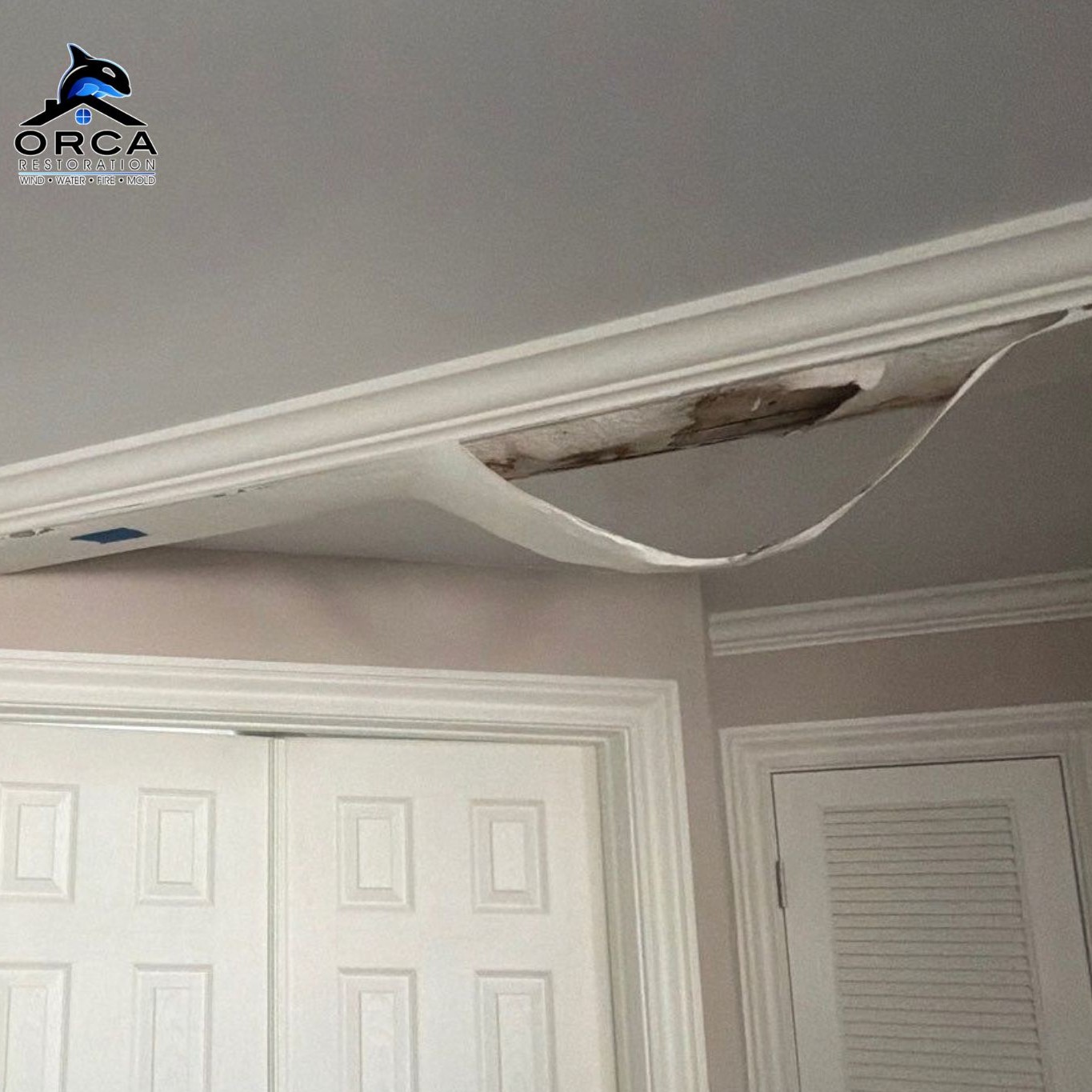
Without temporary protection, rainwater can enter through exposed areas and cause damage that extends beyond the roof itself. Water may travel through ceilings and walls, soak insulation, damage flooring, and create conditions that encourage mold growth.
A roof tarp can provide an extra layer of protection while you wait for permanent repairs.
For South Florida property owners, this is especially important during periods of frequent thunderstorms and tropical weather. A roof that is already compromised should not be left exposed if another storm is approaching.
Tarping Helps Reduce Secondary Water Damage
The original roof damage may be relatively limited, but the water that enters through it can create a much larger problem.
For example, a damaged section of roof could allow rainwater to enter an attic. From there, moisture can spread into insulation and ceiling materials. If the water continues into the living space, it may damage drywall, flooring, furniture, and personal belongings.
Once materials become wet, they may require drying, removal, or additional mitigation.
This is one reason early roof tarping matters. It can help reduce the opportunity for rainwater to enter the property and create additional damage.
What Happens If a Roof Tarp Is Already Damaged?
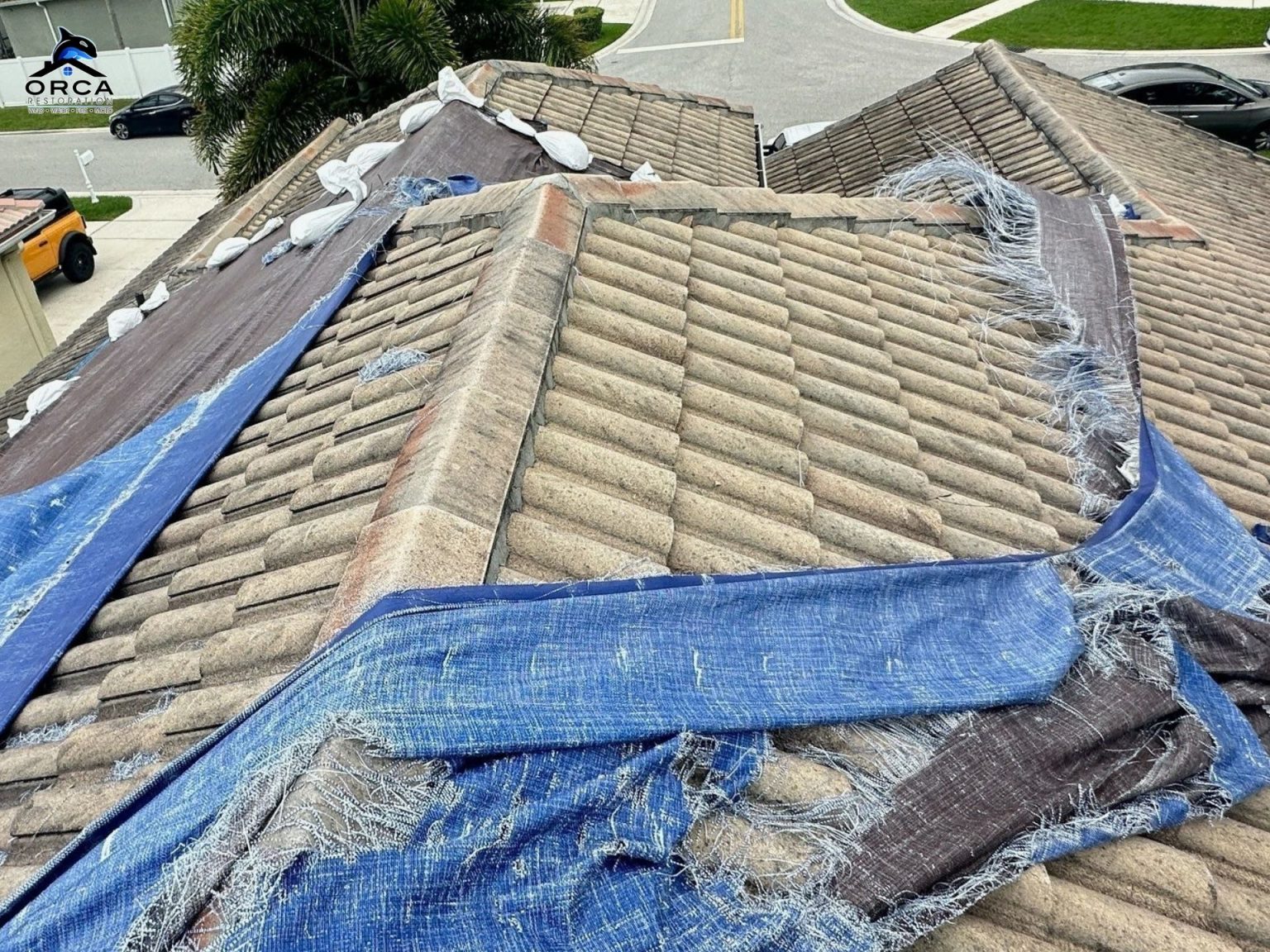
Roof tarps don’t last forever. Strong winds, heavy rain, prolonged sun exposure, and repeated storms can cause a tarp to loosen, tear, or deteriorate.
A tarp that was installed after a previous storm may no longer provide the same level of protection it originally did.
Before the next major storm, property owners should look for signs such as:
- Torn or cracked tarp material
- Loose edges
- Sagging areas
- Exposed sections of the roof
- Water getting underneath the tarp
- Damaged or missing fasteners
If the existing tarp is no longer providing adequate coverage, it may need to be replaced or secured again.
What Is Re-Tarping?
Re-tarping involves replacing or reinstalling a roof tarp that has become damaged, loose, or ineffective.
This can be especially useful for properties that have experienced multiple storms or have been waiting for permanent roof repairs.
At Orca Restoration, we offer roof tarping and re-tarping services for South Florida properties. If an existing tarp has been damaged or is no longer properly protecting the roof, our team can assess the situation and determine whether re-tarping is appropriate.
What Is a Tarp Rollback?
Sometimes, a roof tarp may need to be temporarily rolled back to allow access to the roof or the damaged area underneath it.
A tarp rollback may be needed when another professional needs access to inspect or work on the roof, or when the condition of the underlying roof needs to be evaluated.
Once the necessary work or inspection is completed, the tarp may need to be repositioned to continue providing temporary protection.
Orca Restoration also offers tarp rollback services to help coordinate access while maintaining temporary protection for the property when appropriate.
Roof Tarping Is a Temporary Solution
It’s important to understand that a roof tarp is not a permanent roof repair.
A tarp is intended to provide temporary protection while the property owner arranges for permanent repairs. Leaving a tarp in place indefinitely can eventually lead to additional issues as the material becomes exposed to weather and begins to deteriorate.
After the immediate emergency has been addressed, homeowners should work with a qualified roofing professional to determine what permanent repairs are needed.
If restoration or reconstruction work is needed for other areas of the property following water intrusion, Orca Restoration can also help property owners identify appropriate professionals for those services.
Don’t Wait Until the Storm Is Already Here
One of the worst times to discover that a roof needs protection is during a storm.
Once heavy rain and strong winds arrive, getting someone to safely access and tarp a roof can become much more difficult. Emergency services may also become extremely busy as more properties are affected.
If you already know that your roof has damage, it’s better to address the issue before the next storm arrives.
A professional inspection can help determine whether the existing tarp is still effective or whether additional protection is needed.
South Florida Weather Makes Roof Protection Especially Important
South Florida properties are exposed to a wide range of weather conditions throughout the year. Tropical storms, hurricanes, heavy rainfall, strong winds, and intense sun can all put additional stress on roofing materials.
During hurricane season, even a roof that appears to have only minor damage should be taken seriously. Small openings can allow significant amounts of rainwater inside during a prolonged storm.
Regular roof inspections and preventative maintenance can help identify vulnerable areas before severe weather arrives.
Final Thoughts
A damaged roof doesn’t always give you much time to prepare. If another storm is approaching, even a small opening can become a pathway for rainwater and lead to much more extensive property damage.
Roof tarping provides temporary protection that can help limit water intrusion while permanent repairs are being arranged. Re-tarping may also be necessary when an existing tarp has become damaged or ineffective, while tarp rollback can provide temporary access when the roof needs to be inspected or worked on.
Orca Restoration offers roof tarping, re-tarping, and tarp rollback services for South Florida properties. If your roof has been damaged or your existing tarp needs attention before the next storm, taking care of it early can help give your property an added layer of protection when severe weather arrives.